What Is Trading and How to Start: A Beginner’s Guide
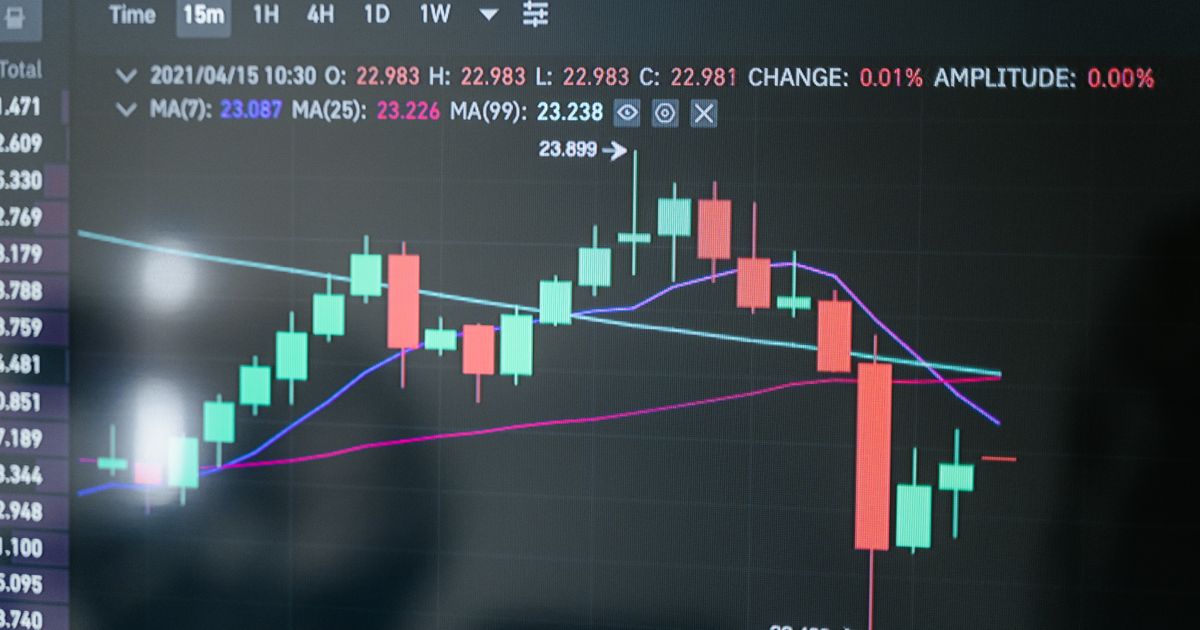
Trading means buying and selling financial assets (currencies, stock indices, shares, commodities or crypto) to profit from their price moves over short periods: minutes to weeks. Unlike investing, the goal is not to hold an asset for years but to catch rises and falls, often with leverage. That magnifies gains and losses alike: according to ESMA, between 74% and 89% of retail CFD accounts lose money.
What you trade, and with which instrument
- Forex: currency pairs such as EUR/USD or USD/JPY. The most liquid market, open 24 hours Monday to Friday.
- Indices: the S&P 500, the Nasdaq 100 or the Dow, many shares in a single price.
- Commodities: gold, silver or crude oil.
- Stocks: individual companies such as Apple or Microsoft.
- Crypto: Bitcoin, Ether and others, which also trade at weekends.
You can trade most of these in three ways: buying the asset outright (you own the share or the coin), through futures (standardized contracts on a regulated exchange such as CME) or, outside the US, through CFDs (a contract with a broker that tracks the price). In the US, CFDs are not offered to retail traders: futures and spot forex through registered dealers are the usual leveraged routes, and most futures prop firms work this way.
Leverage, and how Europe limits it
Leverage means controlling a position larger than your money: at 1:30, $1,000 controls $30,000. Since 2018 ESMA has capped CFD leverage for retail clients in the EU, a useful reference for how risky each market is:
| Asset | Maximum leverage (EU retail) |
|---|---|
| Major currency pairs | 30:1 |
| Other pairs, gold and major indices | 20:1 |
| Commodities and minor indices | 10:1 |
| Individual stocks | 5:1 |
| Crypto | 2:1 |
The rule that matters most: how much you risk per trade
Traders who last decide first how much they accept to lose if a trade goes wrong, usually 0.5% to 2% of the account, and size the position from that figure and the distance to the stop. Example with a $5,000 account, 1% risk ($50) and a 25-pip stop on EUR/USD: one pip on a standard lot is worth $10, so the position would be 0.20 lots ($50 ÷ (25 pips × $10)).
With this method, ten losing trades in a row leave you with about 90% of the account, not zero. Work out your size with the lot size calculator.
How to start, step by step
- Learn the basics: pips, lots, margin and spread. Start with our guides.
- Pick a regulated broker: in the US, check forex and futures firms on the NFA’s BASIC database; be wary of anyone contacting you on social media with promised returns.
- Practise on demo for a few weeks, with the same capital you would trade live.
- Write a plan: which markets, at what hours, when you enter, where the stop goes and how much you risk.
- Go live small and keep a trading journal to learn what works.
Beginner mistakes
- Trading without a stop, or moving it as price gets close.
- Increasing size to win back a loss.
- Trading straight into major releases (Fed decisions, the jobs report) without knowing how price behaves then: check the calendar and news.
- Treating high leverage as an edge: it only makes the result bigger, good or bad.
This guide is for information only and is not investment advice. Trading leveraged products carries a high risk of losing money quickly.
Frequently asked questions
How much money do I need to start trading?
There is no legal minimum for most accounts: many brokers open accounts with $100 to $500. What matters is risking a small share of the account on each trade (1% is a common reference) with money you can afford to lose.
Can I lose more than I deposit?
With futures, yes: a fast move can leave your account negative. In the EU, CFDs carry negative balance protection, but CFDs are not offered to retail traders in the US.
How many retail traders lose money?
According to ESMA’s 2018 analysis, between 74% and 89% of retail CFD accounts lose money. It is the best-documented figure on retail trading results.
Should I start on a demo account?
Yes: a demo account lets you learn the platform and test your plan without real money. Going live changes the psychology, so start with very small sizes afterwards.